
Stay-or-Pay Agreements Meet Their End in New York
By: Elizabeth E. Schlissel, Esq. and Felicia Fortel
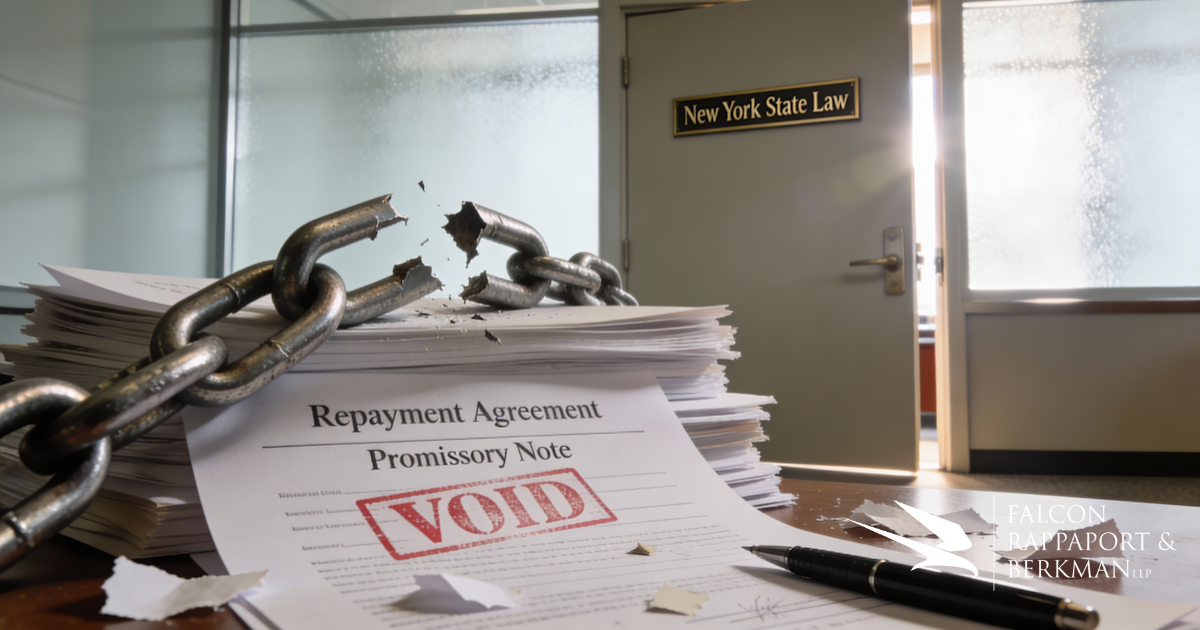
Effective December 19, 2025, New York’s Trapped at Work Act prohibits employers from requiring workers to sign agreements to repay money if they leave a job before a specified date. These stay-or-pay provisions, especially those for training costs, are now void and unenforceable. Employers who violate the Act face civil penalties of up to $5,000 per violation and may have to pay a worker's legal fees if they unsuccessfully try to enforce a prohibited agreement.
The Act broadly defines a prohibited “employment promissory note” as any agreement requiring a worker to pay the employer if they leave before a certain time. While this invalidates many common repayment clauses, particularly for training, the law provides several key exceptions. The table below outlines what is and isn't allowed under the law.
|
Agreement Type |
Status Under the Act |
Key Notes for Employers |
|
Training Repayment Agreements |
Prohibited |
Agreements requiring workers to repay costs for job-related training are explicitly banned. |
|
Repayment of Advances (e.g., Bonuses, Relocation Costs) |
Permitted, with restrictions |
Repayment of money advanced to a worker is allowed, unless the funds were used for job-related training. Agreements should be structured clearly as advances. |
|
Repayment for Property |
Permitted |
Agreements requiring a worker to pay for property sold or leased to them by the employer are allowed. |
|
Collective Bargaining Agreements |
Exempt |
The law does not apply to agreements made as part of a collective bargaining agreement or to sabbatical leave terms for educational personnel. |
Proposed Amendment Update
Notably, the New York Legislature has introduced a proposed amendment that would delay the Act’s effective date by one year and narrow its scope. If passed, the amendment would retain the prohibition on coercive stay-or-pay arrangements, while creating limited, highly regulated exceptions for voluntary tuition assistance and certain repayment agreements, addressing concerns that the original law was overly broad. We will continue to keep you updated on the status of this proposed amendment to the law.
Action Items for Employers
Given these changes, employers should take the following steps:
- Audit employment documents, including offer letters, bonus agreements, and standalone contracts, for any stay-or-pay, repayment, or promissory note provisions.
- Revise templates and remove or rewrite any prohibited clauses to ensure compliance.
- Consider structuring retention incentives, such as sign-on bonuses or relocation payments, as sums advanced to the worker that are distinct from training costs.
- Train managers and HR personnel on the new restrictions to prevent inadvertent non-compliance.
New York’s Trapped at Work Act decisively curtails stay-or-pay arrangements, especially for training, and carries meaningful enforcement risk. Now is the time to audit and update documents, restructure permissible retention incentives as advances separate from training, and train HR teams to avoid missteps.
If you have any questions regarding the new Trapped at Work law, please contact Elizabeth E. Schlissel at eschlissel@frblaw.com or fill out the form below.
DISCLAIMER: This summary is not legal advice and does not create any attorney-client relationship. This summary does not provide a definitive legal opinion for any factual situation. Before the firm can provide legal advice or opinion to any person or entity, the specific facts at issue must be reviewed by the firm. Before an attorney-client relationship is formed, the firm must have a signed engagement letter with a client setting forth the Firm’s scope and terms of representation. The information contained herein is based upon the law at the time of publication.