
Recap: New York Real Property Transfer Tax Regimes
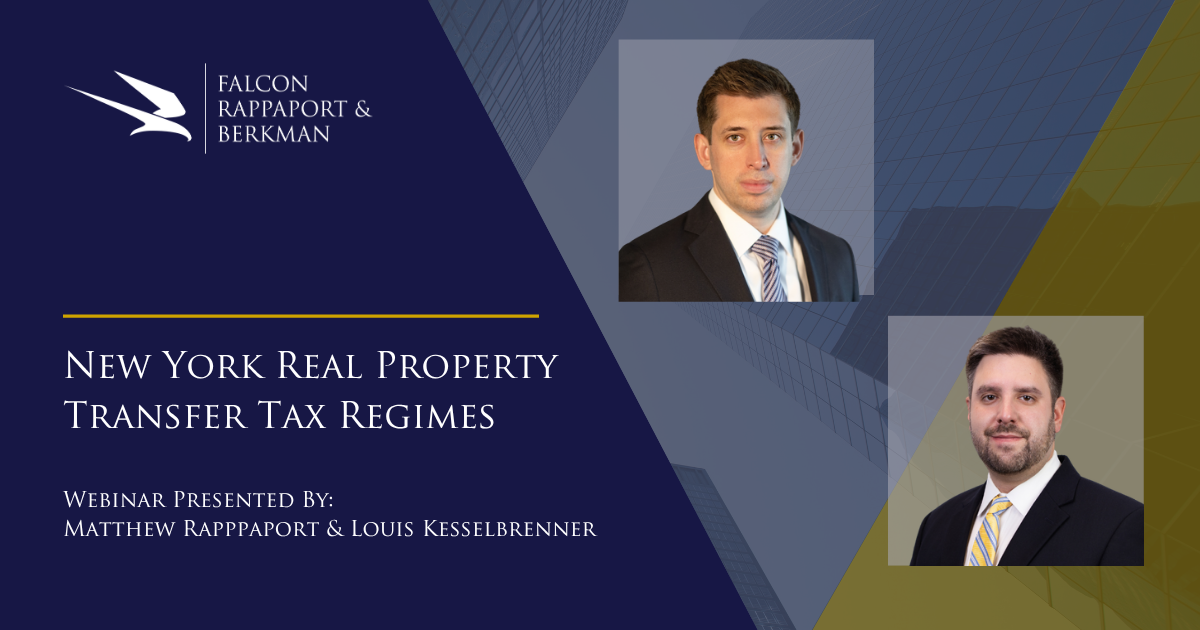
We recently hosted an in-depth webinar examining one of the most nuanced and frequently misunderstood areas of New York real estate taxation: New York State and New York City Real Property Transfer Taxes. Led by FRB’s Vice Managing Partner and Co-Chair of Taxation, Matthew E. Rappaport, and Taxation Associate Louis J. Kesselbrenner, the presentation explored the increasingly complex transfer tax issues that arise in sophisticated real estate transactions, entity restructurings, trust and estate planning, 1031 exchanges, and audit defense matters.
Our attorneys highlighted FRB’s extensive experience advising clients through high-stakes transfer tax planning and defending those positions in audits and disputes with both New York State and New York City taxing authorities.
Understanding New York’s Transfer Tax Framework
The webinar focused on how transfer taxes apply not only to direct real estate conveyances, but also to indirect transfers involving partnerships, LLCs, trusts, corporations, and private equity structures. Matthew and Louis explained that many taxpayers and professionals mistakenly assume transfer taxes apply only when a deed changes hands, when in reality, New York’s rules frequently impose transfer taxes on controlling interest transfers and other beneficial ownership changes occurring “above” the direct property ownership level.
The webinar also outlined the distinctions between the State and City transfer tax regimes, including varying thresholds, exemptions, and supplemental taxes that can significantly increase transaction costs.
Addressing Complex Ownership and Trust Structures
Drawing from real-world examples and audit experiences, the webinar highlighted how FRB assists clients with the New York real estate transfer tax implications of transactions involving:
- Joint venture formations
- Real estate private equity structures
- 1031 exchanges and reverse exchanges
- Drop-and-swap transactions
- Trust and estate transfers
- REIT transactions
- Partnership divisions and restructurings
- Controlling interest transfers
- Leasehold interest conveyances
- Audit defense and conciliation proceedings
A recurring theme throughout the presentation was the lack of clarity and consistency in New York’s transfer tax framework, particularly where transfer tax rules intersect with income tax concepts. State and City guidance is often fragmented across statutes, regulations, rulings, and administrative decisions, creating significant uncertainty for taxpayers and their advisors.
The webinar also explored the unique challenges presented by trust and estate structures, where taxing authorities may inconsistently evaluate grantors, beneficiaries, and beneficial ownership interests when determining transfer tax treatment.
Transfer Tax Audits and Reporting Challenges
We focused on “mere change in form” exemptions, which can exempt transactions from transfer taxes when beneficial ownership remains unchanged. However, these exemptions are highly technical and frequently scrutinized during audits.
Using examples from real client matters, the speakers shared how auditors often focus heavily on ownership tracing and disclosure requirements, particularly when transactions involve tiered partnerships, trusts, REITs, or private equity funds. Even technically correct filings may face examination if schedules and supporting documentation are not prepared with precision.
The discussion also addressed the practical realities of transfer tax audits, including the importance of escalation strategies when disputes move beyond mechanical reporting issues into legal interpretation. Sophisticated legal advocacy becomes essential when taxing authorities inconsistently apply rules involving trust structures, beneficial ownership analysis, or income tax characterization.
Structuring Transactions to Minimize Risk
The webinar highlighted the professional and transactional risks associated with overlooking transfer tax filing obligations, particularly in transactions where no deed is recorded and no title company is involved. Controlling interest transfers and entity-level restructurings can easily create filing obligations that go unnoticed by transaction participants unfamiliar with New York’s transfer tax rules.
Matthew and Louis also examined how New York’s aggregation rules, beneficial ownership tests, and anti-avoidance provisions affect joint ventures, entity formations, and phased ownership transfers. The webinar demonstrated how proactive tax planning can help clients avoid unintended tax exposure and reporting disputes.
FRB’s Integrated Tax and Real Estate Capabilities
In addition to the transfer tax discussion, the webinar mentioned FRB’s broader tax and transactional capabilities, including work involving Section 1031 exchanges, Qualified Opportunity Zones, Qualified Small Business Stock (QSBS), generational wealth transfer planning, M&A transactions, private equity structuring, and sophisticated audit defense matters.
The program concluded with a detailed walkthrough of New York State and New York City transfer tax forms, including common filing errors, exemption schedules, disclosure requirements, and audit-sensitive reporting issues. The presenters also emphasized the importance of comprehensive disclosures and properly documenting ownership structures to minimize audit exposure.
Navigate Complex Transfer Tax and Real Estate Tax Matters with Us
As transfer tax enforcement continues to evolve and ownership structures become increasingly sophisticated, proactive planning and experienced legal guidance remain critical. FRB’s Taxation attorneys assist clients with complex real estate transactions, transfer tax planning, 1031 exchanges, trust and estate-related property transfers, entity restructurings, and audit defense.
For assistance navigating New York real property transfer tax issues and other sophisticated tax planning matters, contact FRB’s Taxation Practice Group at (212) 203-3255 or fill out the form below.
DISCLAIMER: This summary is not legal advice and does not create any attorney-client relationship. This summary does not provide a definitive legal opinion for any factual situation. Before the firm can provide legal advice or opinion to any person or entity, the specific facts at issue must be reviewed by the firm. Before an attorney-client relationship is formed, the firm must have a signed engagement letter with a client setting forth the Firm’s scope and terms of representation. The information contained herein is based upon the law at the time of publication.